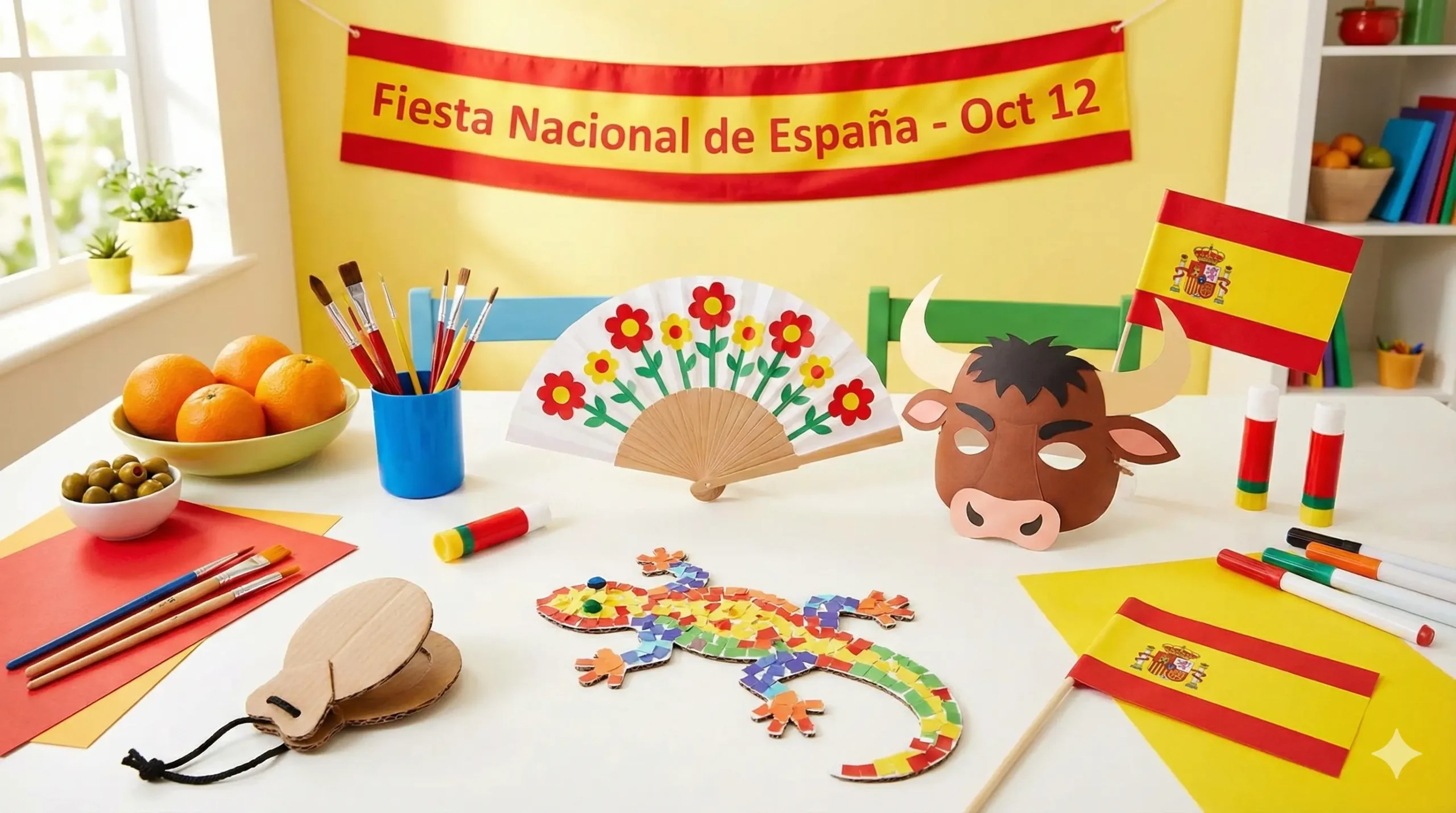
15 Spellbinding Spain Crafts for Kids: Celebrate the Fiesta
What do singer Enrique Iglesias, actress Penélope Cruz, artistic genius Pablo Picasso, and tennis legend Rafael Nadal have in common?
You guessed it – they are all Spaniards!
When we think of Spain, our minds instantly drift to sun-drenched beaches, savory tapas, spirited flamenco dancing, and a zest for life that is contagious. However, this European gem offers much more than just a good vacation spot. It is a land of deep history, incredible architecture, and vibrant traditions.
With National Day of Spain (Fiesta Nacional de España) approaching on October 12th, there is no better time to introduce children to this fascinating culture. Also known as Día de la Hispanidad, this day marks a celebration of everything Spanish—from its history to its modern achievements.
To help you celebrate, we have curated a list of 15 Spellbinding Spain Crafts for Kids. These activities cover everything from famous artists like Gaudi and Picasso to the energetic world of Spanish football. But first, let’s learn a little about the country we are celebrating!
5 Fun Facts About Spain to Share with Kids
Before you break out the glue and scissors, turn your crafting session into a geography lesson with these fascinating facts:
A Tourist Hotspot: Spain is the second most visited country in the world. In fact, in some years, the number of tourists visiting is double the number of people who actually live there!
A Unique Border: It is the only European country that shares a physical border with Africa (via the Spanish autonomous cities of Ceuta and Melilla).
The Land of Olives: If you love olive oil, thank Spain! It is the country with the most olive trees on the planet and produces nearly half of the world’s olive oil.
Dining History: The world’s oldest restaurant, El Restaurante Botín in Madrid, has been serving food since 1725. Even the famous artist Goya worked there as a waiter before he became famous!
A Global Language: Spanish is the second most spoken native language in the world, connecting millions of people across continents.
Now that we are educated on the facts, let’s get creative!
The Ultimate List of Spain Crafts for Kids
We have categorized these crafts to help you explore different aspects of Spanish culture, from art and music to festivals and symbols.
Category 1: Music and Dance (Flamenco & Rhythm)
One of the world’s most popular dances, the Flamenco, was born in Spain (specifically in Andalusia). It involves guitar playing, singing, and rhythmic hand-clapping known as palmas.
1. DIY Cardboard Castanets Castanets are percussion instruments used in Spanish music (though rarely by Flamenco dancers themselves, contrary to popular belief, they are used in classic Spanish folklore dance).
How to make it: You need a strip of sturdy cardboard folded in half. Glue a metal bottle cap or a button on the inside of each end. When you click the cardboard together, the caps strike, making a satisfying clack-clack sound! Decorate the outside with red and yellow markers.
2. The Elegant Spanish Fan (Abanico) In Spain, fans aren’t just for cooling down; they used to be a way to communicate!
How to make it: Take a long sheet of paper and decorate it with flowers or lace patterns. Accordion-fold the paper (back and forth). Pinch one end and tape it or use a popsicle stick as a handle. Open it up to reveal your beautiful Abanico.
3. Cupcake Liner Flamenco Dancer Capture the movement of the dancer’s dress using household items.
How to make it: Use a pipe cleaner or a drawing for the dancer’s body. For the skirt, take 3-4 red cupcake liners. Flatten them slightly and layer them to create a ruffled, voluminous skirt effect. Add a tiny piece of black paper for the hair bun and a rose!
Category 2: Famous Spanish Artists (Picasso & Gaudi)
Spain has produced some of the world’s greatest artists. These crafts introduce kids to art history.
4. Picasso Cubist Portraits Pablo Picasso, born in Malaga, co-founded the Cubist movement. His portraits often looked “scrambled.”
How to make it: Have kids cut out eyes, noses, mouths, and ears from magazines. On a blank sheet of paper, have them glue these facial features in “wrong” places—an eye on the chin, a nose on the forehead. It’s silly, fun, and historically accurate to his style!
5. Gaudi Mosaic Art (Trencadís) Antoni Gaudí is famous for his colorful architecture in Barcelona, particularly the Park Güell which features mosaics made of broken tiles (Trencadís).
How to make it: Draw a lizard or a salamander (a famous symbol in Park Güell) on a piece of cardstock. Instead of coloring it in, have kids cut small squares of colored construction paper or use crushed colored eggshells to fill in the shape, creating a mosaic effect.
6. Salvador Dali’s Mustache Prop Salvador Dali was known for his surreal paintings and his gravity-defying mustache.
How to make it: Cut a long, thin, curved mustache shape out of black black cardstock. Tape it to a straw or a wooden skewer. Kids can hold it up to their faces for funny photos.
Category 3: Festivals and Celebrations
Spain knows how to party! From throwing tomatoes to building towers, the festivals are unique.
7. La Tomatina Paper Fight La Tomatina is a festival in Buñol where people throw squashed tomatoes at each other.
How to make it: Since we don’t want a messy house, use red paper! Crumple red tissue paper into balls. Wrap them in a layer of smooth red paper to shape them like tomatoes. You can create a “basket” of paper tomatoes and have a safe indoor toss game.
8. The 12 Grapes of Luck (New Year’s Eve) In Spain, it is tradition to eat 12 grapes at midnight on New Year’s Eve for good luck.
How to make it: Use purple paint and wine corks. Dip the cork in purple paint and stamp it 12 times on paper in a cluster shape to represent the grapes. This helps with counting skills for toddlers!
9. Carnation Tissue Flowers The red carnation is the national flower of Spain.
How to make it: Stack several layers of red tissue paper. Accordion fold them together. Tie a wire in the center. Gently pull the layers apart and fluff them up to create a 3D carnation. These can be worn in the hair like a flamenco dancer.
Category 4: Icons and Symbols
10. The Friendly Bull (Ferdinand) While bullfighting is a controversial part of history, the Bull itself is an iconic symbol of Spain (Osborne Bull). We prefer the story of Ferdinand, the bull who loved flowers.
How to make it: Paint a toilet paper roll black. Add a black paper head with horns. Glue a small paper flower in his mouth to show he is a peaceful bull.
11. The Spanish Flag Simple, patriotic, and great for color recognition.
How to make it: The Spanish flag features horizontal stripes: red, yellow, red. The yellow stripe is double the width of the red ones. Use paint, colored rice, or torn paper strips to create the flag. Don’t forget the coat of arms off-center on the yellow stripe!
12. Don Quixote’s Windmills Don Quixote is the most famous Spanish novel. The main character famously fights windmills, thinking they are giants.
How to make it: Use a paper cup as the base (the tower). Make a pinwheel out of paper and attach it to the cup using a push pin so it actually spins.
13. Paper Plate Paella Paella is the most famous Spanish dish, originating from Valencia.
How to make it: Paint a paper plate yellow (for the saffron rice). Cut out shapes from paper to represent shrimp (pink), mussels (black), and peas (green). Glue the “ingredients” onto the “rice.”
14. Sagrada Familia Towers The Basílica i Temple Expiatori de la Sagrada Família has been under construction for over 130 years!
How to make it: Gather several paper towel rolls and toilet paper rolls of different heights. Paint them brown or sand-colored. Group them together to mimic the towering spires of the cathedral. Use a black marker to draw the intricate windows.
15. Spanish Football (Soccer) Jersey Football is a religion in Spain. The national team is known as La Roja (The Red One).
How to make it: Cut a t-shirt shape out of red cardstock. Let kids decorate it with yellow trim and their own jersey number. This is perfect for the sports-loving kid in the family.
Why Cultural Crafts Matter for Kids
Engaging in crafts related to a specific country like Spain is more than just a way to pass the time. It is a vital educational tool.
Cultural Appreciation: It normalizes diversity and teaches children that the world is big and full of different traditions.
Sensory Learning: Making castanets teaches rhythm; making mosaics teaches patterns and texture.
Geography Connection: When you make the craft, show them Spain on a map. Visualizing the location solidifies the learning.
Conclusion
Spain is a country that vibrates with color, sound, and passion. By bringing these 15 Spain crafts for kids into your home or classroom, you aren’t just making paper toys; you are opening a door to the Mediterranean.
Whether you are clicking your homemade castanets, admiring your Gaudi-inspired mosaic, or waving your red and yellow flag, you are partaking in the spirit of the Fiesta Nacional de España.
So, grab your supplies, put on some Spanish guitar music, and let your imagination travel to the Iberian Peninsula. ¡Olé!
Frequently Asked Questions (FAQs)
Q: When is the National Day of Spain? A: It is celebrated annually on October 12th. It commemorates the arrival of Christopher Columbus in the Americas in 1492, marking the spread of Spanish language and culture.
Q: What is the easiest Spanish craft for toddlers? A: The “Spanish Flag” using finger paints or the “12 Grapes” cork stamping are excellent for toddlers as they focus on simple colors and motor skills without needing complex cutting.
Q: Are these crafts suitable for a classroom setting? A: Absolutely! The Picasso Faces and Paper Fans are particularly good for large groups because they require minimal supplies and allow for individual creativity.